
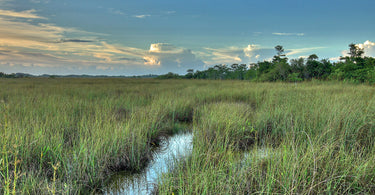
The highest point in Everglades National Park is just eight feet above sea level. There are no towering peaks or plunging canyons here. Instead, you get a vast, shimmering sea of sawgrass, slow water moving south toward the sea, and so much wildlife that an alligator snoozing beside the trail barely earns a second glance from the locals.
The Everglades was the first national park set aside to protect biological diversity rather than dramatic scenery, and that makes it a very different kind of bucket list park. Come in winter, walk a boardwalk at sunrise, and watch herons, anhingas and gators go about their day. It is a quiet kind of wonder, and it deserves a proud pin on your map.
Where is Everglades National Park?
The park covers about 1.5 million acres of South Florida across Miami Dade, Monroe and Collier counties. Unlike most parks, it has three separate entrances that do not connect to one another inside the park, and each is at least an hour's drive from the others.
The main entrance is in Homestead, home to the Ernest F. Coe Visitor Center and the road to Royal Palm and Flamingo, which sits 38 miles to the south. The Shark Valley entrance is on the Tamiami Trail (US 41), about 25 miles west of the Florida Turnpike and the closest entrance to Miami. The water based Gulf Coast entrance is in Everglades City, closest to Naples. There is no public transportation within the park, so plan on a car.
Congress authorized Everglades National Park in 1934, and it was established in 1947. Today it is the only place in the United States designated as an International Biosphere Reserve, a World Heritage Site and a Wetland of International Importance.
A river of grass
Long ago, water in South Florida flowed freely from the Kissimmee River into Lake Okeechobee and then south in a shallow, slow sheet that covered almost 11,000 square miles. That flow created a mosaic of sawgrass marshes, sloughs, ponds and tree islands. Marjory Stoneman Douglas captured it in her 1947 book "The Everglades: River of Grass", and her writing helped spark the movement to protect it. The park's legislated wilderness now carries her name.
The Everglades formed about 5,000 years ago on top of porous limestone, and in this flat world even a few inches of elevation decide what grows where. You will find freshwater sloughs, marl prairies, pinelands, tropical hardwood hammocks, cypress, mangroves and the seagrass meadows of Florida Bay. Park managers describe it as the largest subtropical wilderness in North America.
Gators, spoonbills and panthers
This is a wildlife park first and foremost. The Everglades is home to 36 threatened or endangered species, including the Florida panther, along with more than 350 species of birds and 40 species of mammals. It is also home to both the American alligator and the American crocodile, along with roseate spoonbills, the Cape Sable seaside sparrow and the rare ghost orchid. Keep an eye on the water near the Flamingo marina, where manatees, tarpon and crocodiles are sometimes spotted from the dock.
Please give wildlife plenty of room. The park asks visitors to stay at least 15 to 20 feet from alligators and crocodiles, and swimming is not allowed in canals, ponds, freshwater lakes, marked channels or boat basins.

People of the Everglades
Before the Spanish arrived in 1513, this region was largely home to the Calusa, who emerged around 1000 B.C. and built a highly organized society. They left behind large shell works, shell tools, carved wood and long distance canoe trails. The Seminole and Miccosukee, tribes affiliated with the Creek, were in the area as early as the eighteenth century. Later came small coastal settlements like Flamingo and Chokoloskee, and the self reliant people known as Gladesmen, who hunted, camped and lived off the land.
Best things to do at Everglades National Park
Walk the Anhinga Trail
If you only do one thing, make it this. The Anhinga Trail starts at the Royal Palm Visitor Center, about four miles from the main entrance, and is a 0.8 mile round trip on pavement and boardwalk that is wheelchair accessible. It is one of the best spots in the park to see alligators, turtles and wading birds up close. The nearby Gumbo Limbo Trail, also paved, explores a different ecosystem.
Explore the Main Park Road
On the long drive toward Flamingo, stop at the Pa hay okee Overlook for a sweeping view across the sawgrass, and at Mahogany Hammock, a half mile boardwalk loop through a jungle like hammock that shelters the largest living mahogany tree in the United States.
Bike or ride the tram at Shark Valley
Shark Valley is famous for its 15 mile paved loop, open only to walkers, bicycles and the narrated tram. Halfway around, an observation tower gives you a panoramic view of the River of Grass. Bring water and sun protection, since shade is limited. Bike rentals and tram tours are run by a park authorized concessioner.

Take a boat tour from Flamingo
At the end of the road, Flamingo offers 90 minute guided boat tours, including a year round backcountry trip up the Buttonwood Canal toward Whitewater Bay and a seasonal tour of Florida Bay. You can also rent canoes, kayaks and bikes, camp by the bay, or stay at the new Flamingo Lodge.
Paddle into the wilderness
Experienced paddlers can explore canoe trails like Nine Mile Pond and Hells Bay, or tackle the 99 mile Wilderness Waterway through the western part of the park. All wilderness camping requires a permit.
Tips for planning your visit
- Best time to go: The dry season, roughly December through April, is the most popular time and the best for wading birds. The wet season, May through November, brings heat, storms and plenty of mosquitoes.
- Fees and reservations: Everglades is one of the parks where visitors who are not US residents now pay an additional nonresident fee. Check the official NPS website for current fees and any reservation requirements before you go, and buy a digital pass ahead of time to shorten your wait at the gate.
- Beat the lines: On busy winter weekends, Homestead and Shark Valley can be very congested, and Shark Valley parking often fills by 10 a.m. Visit on a weekday and arrive early.
- Pack your own food: Food options are limited to snacks at a few visitor centers and the Flamingo marina store, plus a food truck in Flamingo. Bring insect repellent, sun protection and plenty of water.
- Airboats: The three authorized airboat operators inside the park are along the Tamiami Trail, not at Shark Valley or Flamingo.
- Road trip pairing: Pair the Everglades with Biscayne National Park, its watery neighbor in South Florida, for two very different parks in one trip.
🐝 A note from PennyBee
In the Everglades, eight feet counts as a summit, which makes our little wooden tree pins feel downright mountainous. Pin it proudly, bring the bug spray, and wave to the gators from a very respectful distance.
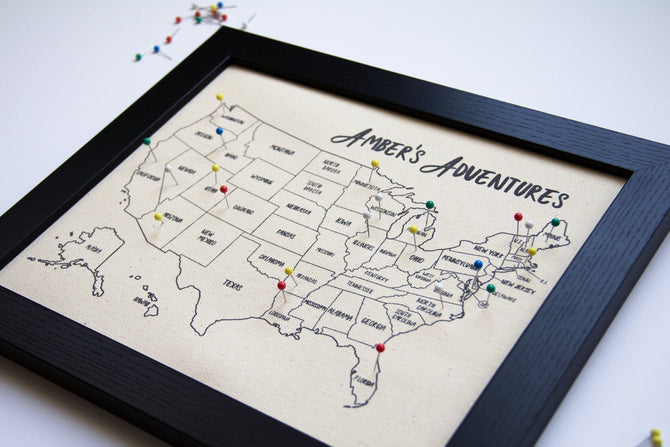
Add the Everglades to your national parks map
After a day of herons and boardwalks, mark the moment. Our US National Parks Push Pin Map shows all 64 national parks and comes with a handmade wooden tree pin for each one, so the River of Grass can take its place among your family's adventures.

For more inspiration, read our guide on how to track the national parks you visit and explore our national and state park maps. If you love a park that surprises you, our Death Valley National Park guide covers the Everglades' total opposite: the hottest, driest corner of the country.
Featured image: Photo: G. Gardner, NPS, public domain, via Wikimedia Commons.
